
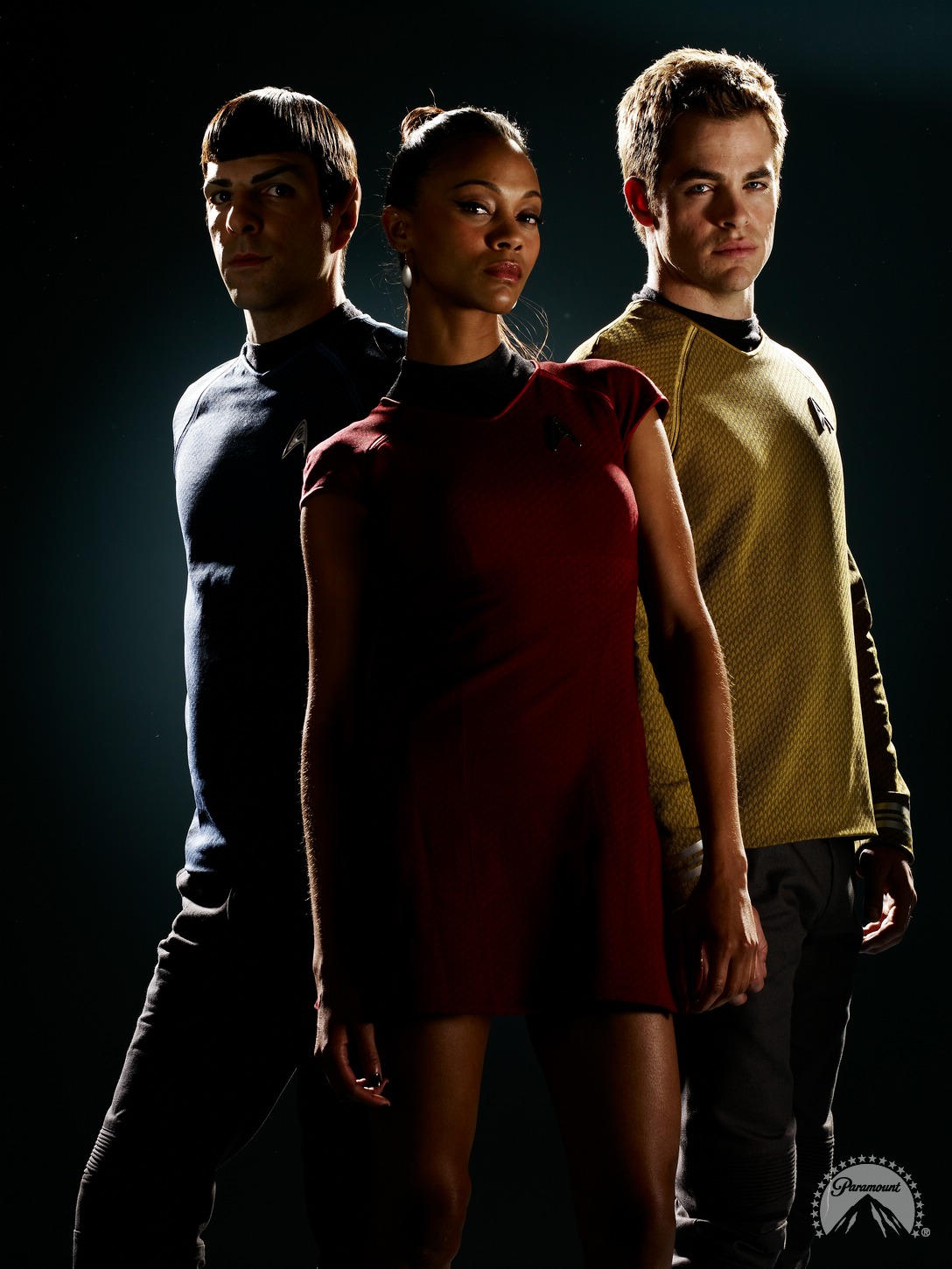
If you are here, reading this article, then you know that the basic philosophy of Star Trek is that everyone is traveling on a spaceship that is a symbol of Planet Earth (Spaceship Earth, I think it most commonly goes by). However, the show is certainly not the sparkling spire that shines brightly within our memories. In fact, in deeper examination, one can find very dated opinions and politics contained within the original series, especially in regard to women in Trek and their treatment in the original series. While it’s to be expected, as the show is almost 50 years ago, some of the sexism is downright unpleasant. One thing that has been stuck in my craw ever since I became aware of it was its gender politics. While Roddenberry tried to insert Number One into the show as first officer in "The Cage," it didn't hold. What's more, as the show went on, the show certainly caved more to societal pressures of the time that audiences wouldn't accept a woman because she was considered less than a man. The Gender Politics of The Original Series Whether this was Roddenberry's fault, or him having to cave to the pressures of the studios, isn't the thing up for thinkpiecing right now. What we do have to examine is Star Trek's gender politics. The franchise as a whole has certainly been through peaks and troughs with its depiction of women in the universe and, quite frankly, the official canon hasn't done a bang up job of it. Most famously, the final episode of Trek boldly declared that "women can't be starship captains." Roddenberry had bailed from Trek for the most part by this point, but the point still stands. Sexism was rampant in the original Trek. The women were originally in pants, but were then changed to the much more scantily clad miniskirts and boots after the first two pilots. This was made all the worse when they decided to ditch Rand and, instead, have a woman of the week. Instead of spending time with a potential love interest for Kirk and building a multi-faceted relationship with a capable officer and woman, the producers traded on cheap peeks of skin and the prettiest guest stars they could find. Women were no longer equals by that time; they were trophies that were acquired if Kirk had successfully won the day. Sexism and 2009 Trek This changed when the movies and Next Generation came around. However, it's very worth talking about the sexism in the original series, as it has been perpetuated through the latest incarnation of "official" Trek. In the 2009 films, instead of giving Uhura a uniform capable of function, she was once again clad in a miniskirt and short, short sleeves, while the men were able to run around with full uniform garb.
Throwback Thursday: The Girls, Girls, Girls of Trek!
Kenny Madison is a guest-writer on the Axanar blog. If you are here, reading this article, then you know that the basic philosophy of Star Trek is that everyone is traveling on a spaceship that is a symbol of Planet Earth (Spaceship Earth, I think it most commonly goes by). However, the show …
Kenny Madison is a guest-writer on the Axanar blog.
If you are here, reading this article, then you know that the basic philosophy of Star Trek is that everyone is traveling on a spaceship that is a symbol of Planet Earth (Spaceship Earth, I think it most commonly goes by). However, the show is certainly not the sparkling spire that shines brightly within our memories. In fact, in deeper examination, one can find very dated opinions and politics contained within the original series, especially in regard to women in Trek and their treatment in the original series. While it’s to be expected, as the show is almost 50 years ago, some of the sexism is downright unpleasant. One thing that has been stuck in my craw ever since I became aware of it was its gender politics. While Roddenberry tried to insert Number One into the show as first officer in "The Cage," it didn't hold. What's more, as the show went on, the show certainly caved more to societal pressures of the time that audiences wouldn't accept a woman because she was considered less than a man. The Gender Politics of The Original Series Whether this was Roddenberry's fault, or him having to cave to the pressures of the studios, isn't the thing up for thinkpiecing right now. What we do have to examine is Star Trek's gender politics. The franchise as a whole has certainly been through peaks and troughs with its depiction of women in the universe and, quite frankly, the official canon hasn't done a bang up job of it. Most famously, the final episode of Trek boldly declared that "women can't be starship captains." Roddenberry had bailed from Trek for the most part by this point, but the point still stands. Sexism was rampant in the original Trek. The women were originally in pants, but were then changed to the much more scantily clad miniskirts and boots after the first two pilots. This was made all the worse when they decided to ditch Rand and, instead, have a woman of the week. Instead of spending time with a potential love interest for Kirk and building a multi-faceted relationship with a capable officer and woman, the producers traded on cheap peeks of skin and the prettiest guest stars they could find. Women were no longer equals by that time; they were trophies that were acquired if Kirk had successfully won the day. Sexism and 2009 Trek This changed when the movies and Next Generation came around. However, it's very worth talking about the sexism in the original series, as it has been perpetuated through the latest incarnation of "official" Trek. In the 2009 films, instead of giving Uhura a uniform capable of function, she was once again clad in a miniskirt and short, short sleeves, while the men were able to run around with full uniform garb.
Abrams was capitalizing on the nostalgia of the original Trek and, more than likely, thought the miniskirts were a.) fun, b.) nostalgia-cool, and c.) sexy. What he neglected to put in was the insanely demeaning nature of the uniforms. Certainly, Chris Pine's Kirk wasn't being objectified nearly as much as Zoe Saldana's Uhura.
In one fell swoop, and due in part to adhering to the fabric of the show, the gender politics of Star Trek had been thrown back to 1966. For me, that's not cool.
Luckily, we have smart people at Axanar that do the insanely smart thing of cherry picking canon. Choosing not to slavishly adhere to what has passed, they smartly cast Kate Vernon as the fierce Captain Sonya Alexander. She is no medal to be won; instead, she is the one that is winning the medals.
What’s important after analyzing all of these things is not taking it as a piece of rage prose. This is not condemnation, but truly embracing these aspects as part of the fabric of the darn thing. You can’t just ignore the most awkward elements of this show. If you’re like me, you love this show like one of your family. Instead of just running away from the worst aspects, confront them and try to understand where it comes from. Trek was not perfect, but it always aspires to be. For that reason above all, trying not to be better, but to do better, is what counts.
With Axanar, we can hope to see the further advancement Trek's gender politics. While the franchise has certainly had its ups and downs, the smart people of the team, along with the greater awareness of what has come before, will lay down the groundwork for a better Trek - and a better tomorrow.
If you are here, reading this article, then you know that the basic philosophy of Star Trek is that everyone is traveling on a spaceship that is a symbol of Planet Earth (Spaceship Earth, I think it most commonly goes by). However, the show is certainly not the sparkling spire that shines brightly within our memories. In fact, in deeper examination, one can find very dated opinions and politics contained within the original series, especially in regard to women in Trek and their treatment in the original series. While it’s to be expected, as the show is almost 50 years ago, some of the sexism is downright unpleasant. One thing that has been stuck in my craw ever since I became aware of it was its gender politics. While Roddenberry tried to insert Number One into the show as first officer in "The Cage," it didn't hold. What's more, as the show went on, the show certainly caved more to societal pressures of the time that audiences wouldn't accept a woman because she was considered less than a man. The Gender Politics of The Original Series Whether this was Roddenberry's fault, or him having to cave to the pressures of the studios, isn't the thing up for thinkpiecing right now. What we do have to examine is Star Trek's gender politics. The franchise as a whole has certainly been through peaks and troughs with its depiction of women in the universe and, quite frankly, the official canon hasn't done a bang up job of it. Most famously, the final episode of Trek boldly declared that "women can't be starship captains." Roddenberry had bailed from Trek for the most part by this point, but the point still stands. Sexism was rampant in the original Trek. The women were originally in pants, but were then changed to the much more scantily clad miniskirts and boots after the first two pilots. This was made all the worse when they decided to ditch Rand and, instead, have a woman of the week. Instead of spending time with a potential love interest for Kirk and building a multi-faceted relationship with a capable officer and woman, the producers traded on cheap peeks of skin and the prettiest guest stars they could find. Women were no longer equals by that time; they were trophies that were acquired if Kirk had successfully won the day. Sexism and 2009 Trek This changed when the movies and Next Generation came around. However, it's very worth talking about the sexism in the original series, as it has been perpetuated through the latest incarnation of "official" Trek. In the 2009 films, instead of giving Uhura a uniform capable of function, she was once again clad in a miniskirt and short, short sleeves, while the men were able to run around with full uniform garb.
Axanar NewsStar Trek
