
I'm not a lawyer, I do not even play one on TV. And nothing I've posted about the Axanar lawsuit has ever been intended as legal commentary. It was intended as the opinion of a knowledgeable observer.
I've had dealings with Paramount legal since the early seventies, and in almost every case found them to be intelligent, well-researched, and understanding not only their own rights, but also well-aware of the full scope of the circumstances they must deal with. I have also, from time to time, been asked by people at Paramount to help them understand various situations with fans.
I've also had dealings with CBS, mostly good. And again, the folks at CBS want to have a good relationship with the fan-base. Many are enthusiastic about Star Trek. The one person I did have contact with at CBS legal probably isn't there anymore. He was an ass. But I don't think he represents all of corporate thinking.
I've also worked on Trek in a variety of roles, I've worked on New Voyages and I've given Alec Peters as much moral support as I can, because I admire his enthusiasm and commitment as well as his integrity.
That this situation has occurred is probably because of a lack of communication -- possibly on both sides. I do believe that CBS has not been as clear as they could be on the guidelines for fan films, but I suspect that to a great deal they don't understand the situation they've inherited and don't understand how to make the best of it.
Regardless of the legal issues that have been discussed ad infinitum, ad nauseum, I stand by my conviction that the only win-win here is to find a way for CBS to license fan films and issue a CBS approved release of fan films -- specifically identifying them as amateur productions.
There is a larger issue here, as well. The film industry is like the planet Earth at the end of the Cretaceous era. A gigantic comet has just slammed into it. That comet is the synergistic combination of modern day electronics and the internet.
For less than a grand you can get a phone or a camera that shoots 4K video. For less than a grand, you can get a laptop on which you can edit that 4K video. If you spend $6K, you can get equipkment and software and lights that will give you professional level quality. This means that just about anyone who wants to make film CAN make film.
The internet gives you worldwide distribution. Instantly.
Now, imagine the big studios are like big lumbering dinosaurs. They're successful in their ecological niche. They proceed slowly, but inevitably. They spend $100 million to lay an egg, and they can only lay one or two eggs a year. And they desperately need at least one of those eggs to hatch and generate a billion dollars so they can keep laying eggs.
Meanwhile, there's all these little egg-sucking therapsids running around, laying hundreds of little offspring that cost them only a few thousand. Like THE BLAIR WITCH PROJECT or PARANORMAL ACTIVITY. Some of those little offspring are so spectacular, they end up generating hundreds of millions of dollars. The return on investment is incredible -- and that inspires thousands more hungry little egg-sucking therapsids to make thousands more of these little projects.
Where the dinos can produce only one or two eggs a year, the therapsids can produce two or three litters in the same time.
Ecologically, those nasty little therapsids will outbreed the dinosaurs, easily. Every time.
Now, if the dinos try to stamp out the egg-suckers, they'll fail. There are too many. And it's a waste of time and energy. The dinos need to concentrate on being the best dinos they can.
But if the dinos can find ways to partner with the therapsids, there are opportunities for all to live long and prosper. The success of the studios, the dinos, lies in the fact that they have well-established distribution channels. That's something the therapsids do not have. The therapsids can produce quality imaginative films that the studios cannot, because nothing is as timid as a hundred million dollars.
So the obvious answer is for the studios to create partnership situations where the little independents can get the protection of the studios and the studios can enjoy the profits that come from supporting and distributing work that otherwise would languish.
The real winners, of course, will be the audience -- because they will have the opportunity to see much more imaginative films than they could ever see otherwise.
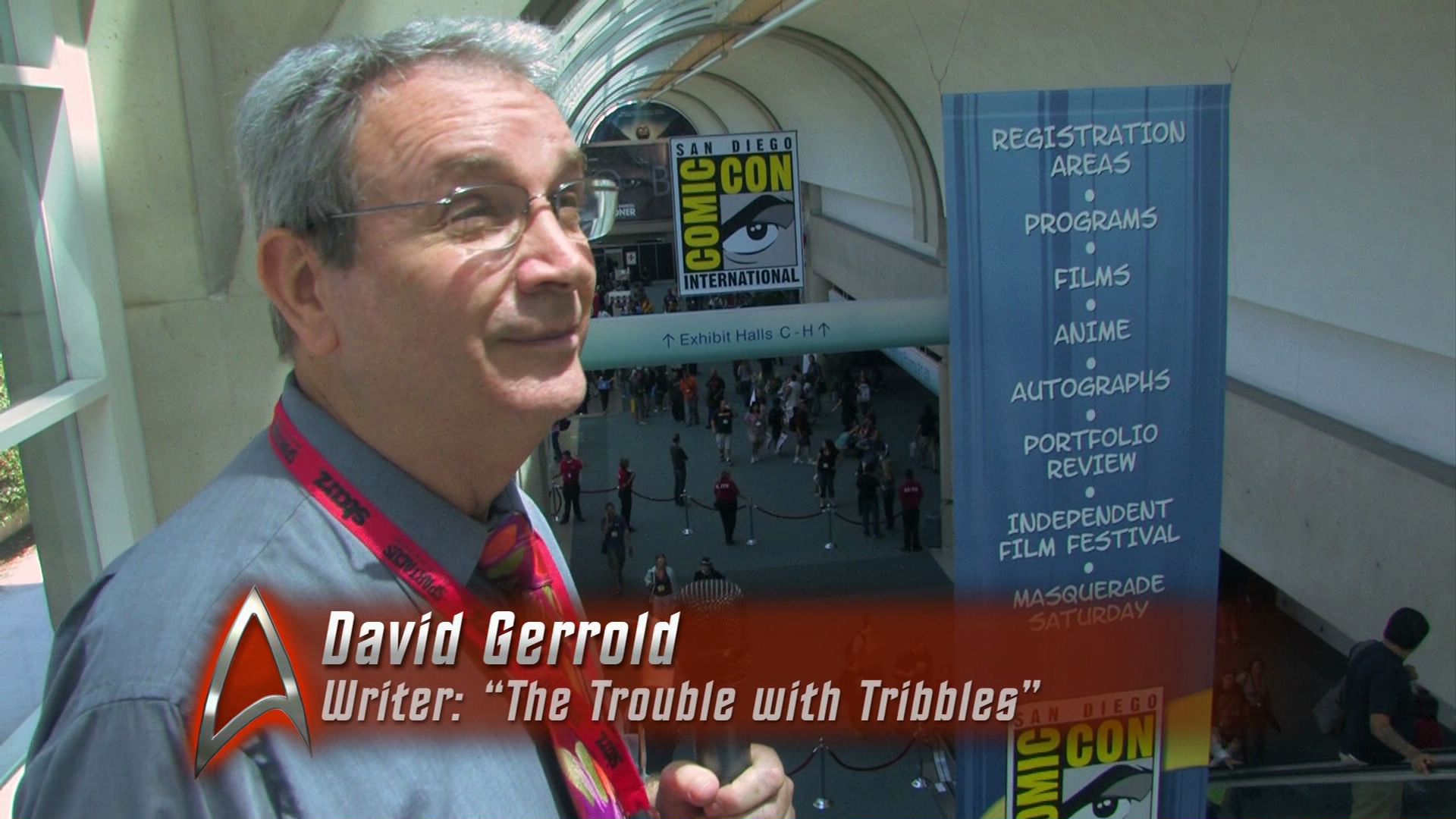
David Gerrold
David Gerrold (born January 24, 1944) is an American science fiction screenwriter and novelist known for his script for the popular original Star Trek episode “The Trouble With Tribbles“, for creating the Sleestak race on the TV series Land of the Lost, and for his novelette “The Martian Child“, which won both Hugo and Nebula awards, and was adapted into a 2007 film starring John Cusack.