
 Wednesday, April 27th, 2016
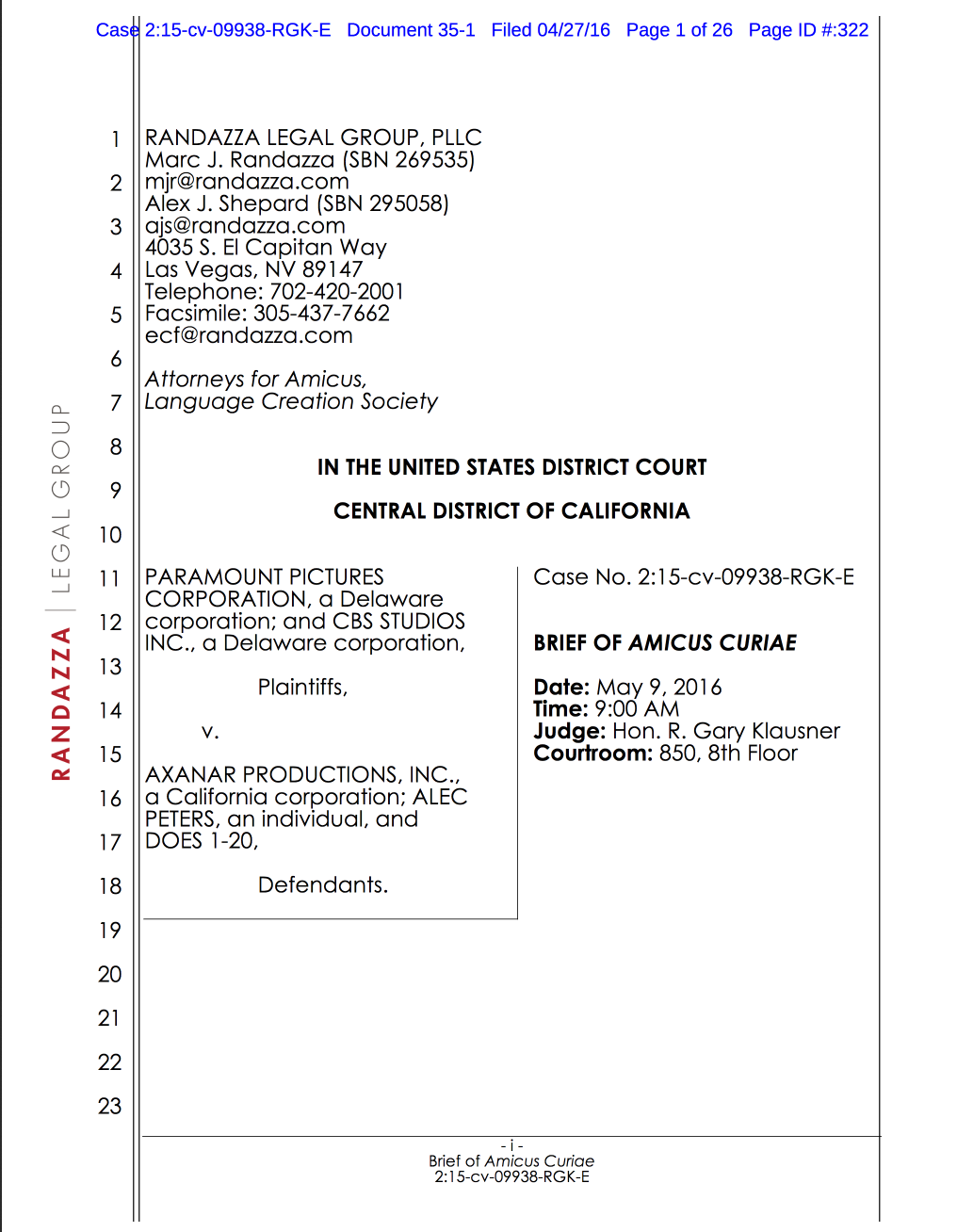
Well today we found out that a lawyer named Mark Randazza representing the Language Creation Society has filed an Amicus Brief on our behalf.
 What is that? Well, The Wiki says...
An amicus curiae (literally, friend of the court; plural, amici curiae) is someone who is not a party to a case and offers information that bears on the case, but who has not been solicited by any of the parties to assist a court. This may take the form of legal opinion, testimony or learned treatise (the amicus brief) and is a way to introduce concerns ensuring that the possibly broad legal effects of a court decision will not depend solely on the parties directly involved in the case. The decision on whether to admit the information lies at the discretion of the court. The phrase amicus curiae is legal Latin.
And here is a sample of the brief: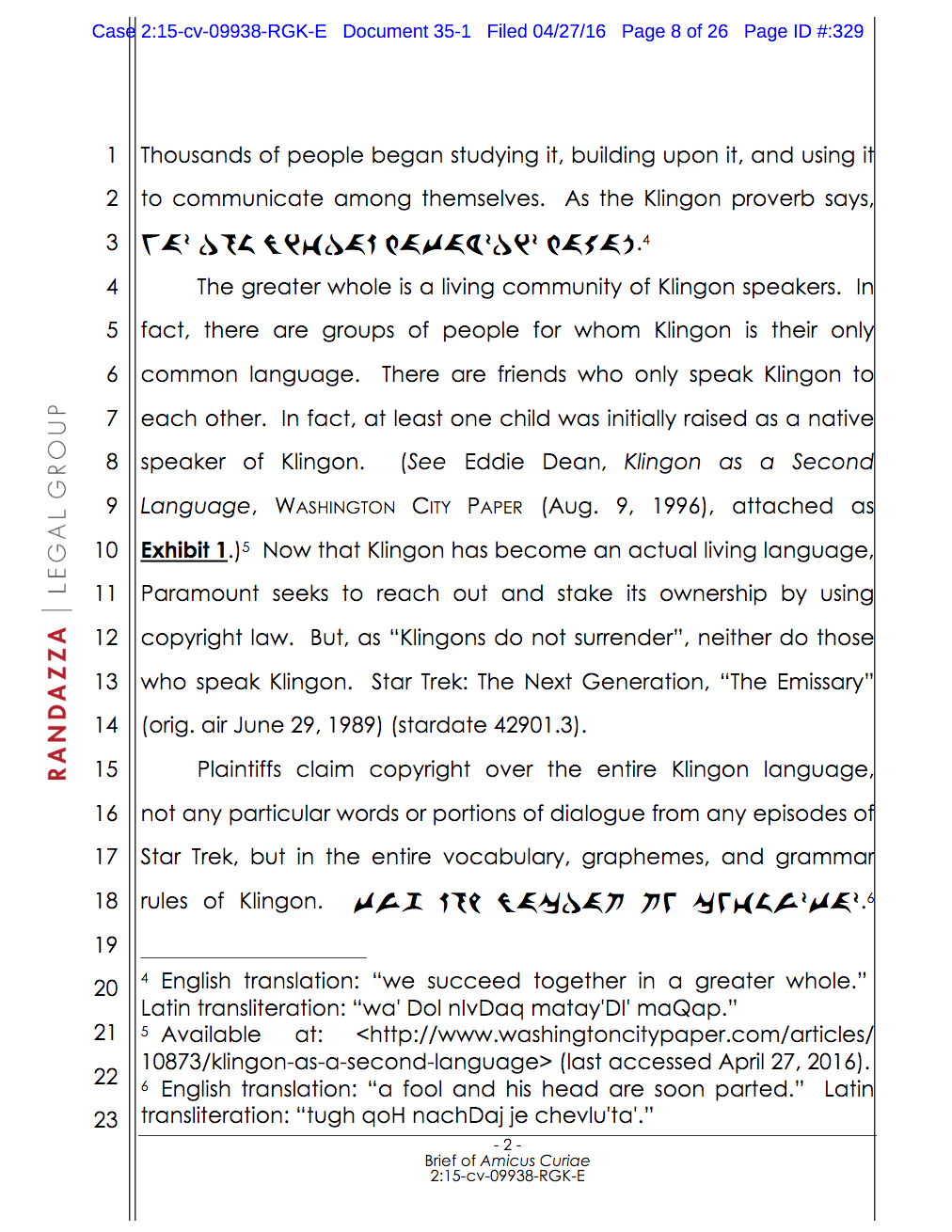 Read a great article about this brief on the Pope hat blog.
And here is the most relevant snippet:
This is not a case about Defendants using specific, previously used Star Trek dialogue, such as “Tea, Earl Grey, Hot”, but rather about precluding Defendants from creating original dialogue that happens to be in the Klingon language. Plaintiffs provide no authority supporting their assertion that Klingon (or any language) can be copyrighted. “here is no Klingon word for ‘deference’”, and Plaintiffs are entitled to none. Norwood v. Vance, 591 F.3d 1062, 1074 n. 4 (9th Cir. 2010) (Thomas, J. dissenting).
You can download the brief here. Thanks Mark! We owe you a barrel of Blood Wine (after we pay the licensing fee to CBS). Alec